
Dr. Y. K. Amdekar:
The Teacher Who Shaped Generations of Pediatricians
In the history of Indian Pediatrics, a few names transcend academic achievements and become institutions in themselves. One such towering personality is Yeshwant K. Amdekar, affectionately known across the country as "Amdekar Sir."
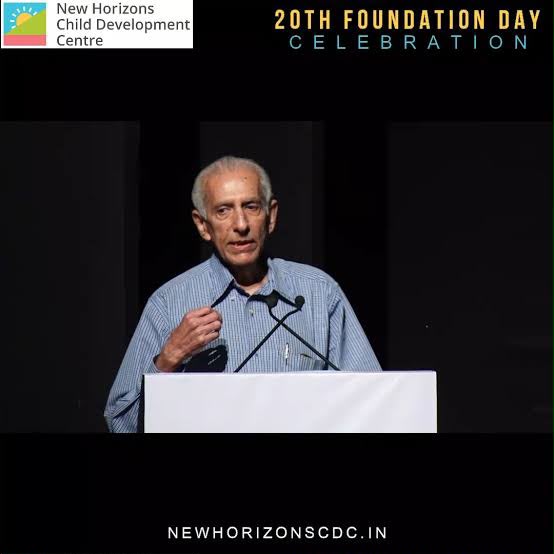
At an age when most professionals have long retired from active teaching, Dr. Amdekar continues to inspire audiences with the same passion, clarity, and energy that have defined his career for over five decades. Even today, at around 85 years of age, he can be seen standing for hours, delivering lectures that captivate postgraduate students, young consultants, and senior pediatricians alike.
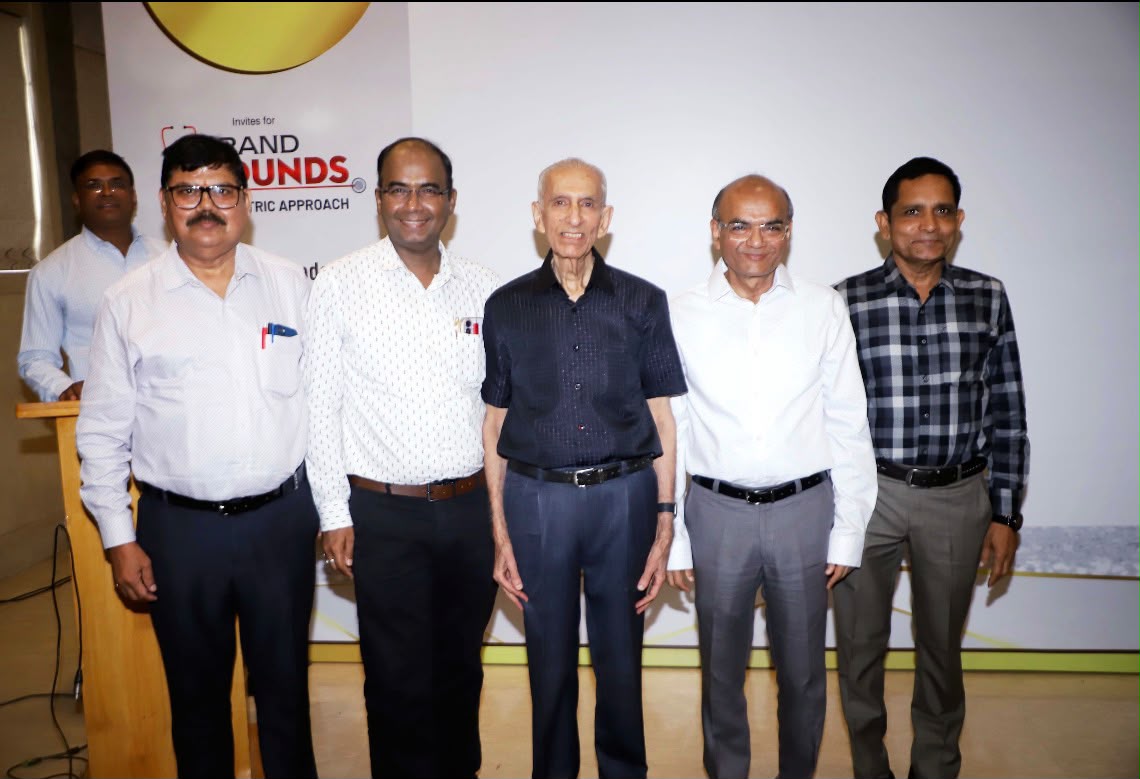
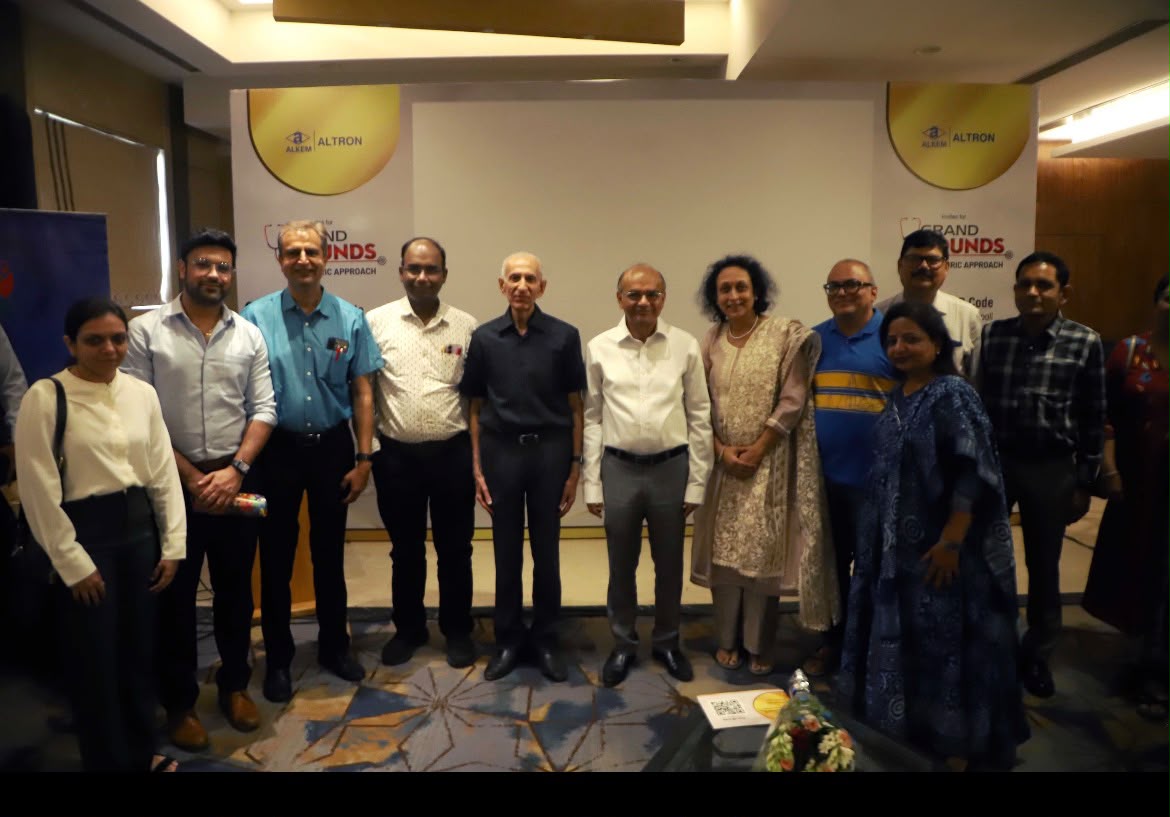
It is not uncommon to find three generations of pediatricians sitting together in his lectures — teachers, their students, and the students of those students. Such a legacy is rare in any profession and extraordinary in medicine.
"Three generations of pediatricians sit together in his lectures — teachers, their students, and the students of those students."
A Life Dedicated to Pediatrics
Dr. Yeshwant K. Amdekar is among India's most respected pediatricians. He served as a teacher at Grant Medical College for nearly three decades and retired as Professor of Pediatrics in 2000. Over the years, he has educated and mentored countless pediatricians who today lead departments, medical colleges, and hospitals across India.
He later served as Medical Director of B. J. Wadia Hospital for Children, one of India's most respected pediatric institutions — a hospital where generations of children have received compassionate, expert care, and where generations of doctors have learned to give it.
His contributions to organized pediatric medicine are equally distinguished. He served as President of the Indian Academy of Pediatrics in 1995 and contributed significantly to the growth of pediatric education and subspecialty development in India.
More Than a Clinician: A Master Teacher
What distinguishes Dr. Amdekar is not merely his knowledge but his approach to medicine. He repeatedly reminds young doctors that medicine is not a game of investigations; it is a science rooted in observation, listening, and clinical reasoning.
His lectures emphasize that the diagnosis often begins the moment a physician sees the child and speaks to the parents. The clinical encounter — that first conversation, that careful look — holds more information than any laboratory report if the physician is trained to receive it.
"Medicine is not a game of investigations. It is a science rooted in observation, listening, and clinical reasoning."
For thousands of pediatricians, clinical reasoning became more than a topic — it became a way of practicing medicine because of Dr. Amdekar's teachings. His educational sessions span the full breadth of pediatric medicine:
- Fever, diarrhea, vomiting, and acute infections
- Cough and respiratory illnesses
- Growth disorders and nutritional assessment
- Developmental assessment and milestones
- Rational antibiotic use and antimicrobial stewardship
- Ethics and compassion in clinical practice
These sessions continue to attract learners from across the country — not merely for the information they contain, but for the mindset they impart.
The Author Who Taught Doctors How to Think
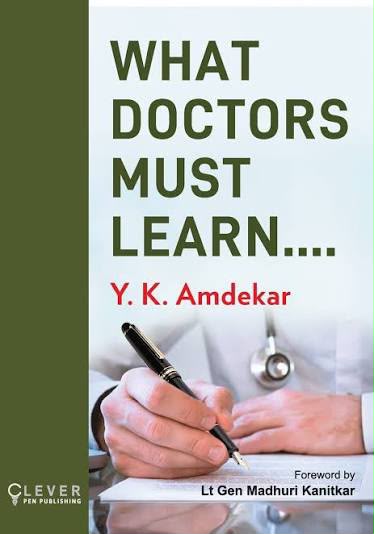
While many medical authors teach facts, Dr. Amdekar's writings teach physicians how to think. Each of his major works addresses a fundamental dimension of clinical practice that medical schools rarely emphasize enough: the art of medicine.
In addition to these four landmark volumes, Dr. Amdekar has authored textbook chapters, conference publications, and numerous articles in indexed medical journals, contributing extensively to pediatric literature and continuing medical education across India.
The common thread running through all his works is a conviction that the physician's greatest tool is not the machine behind the wall, but the mind behind the eyes.
"The physician's greatest tool is not the machine behind the wall, but the mind behind the eyes."
The Teacher of Three Generations
Few educators in any field can claim to have influenced an entire specialty. Dr. Amdekar belongs to this extraordinary company. Thousands of pediatricians across India proudly describe themselves as students of "Amdekar Sir."
Many professors who are teaching today's postgraduate students were themselves trained under him at Grant Medical College. Those professors' students are now faculty members of their own. As a result, his lectures often bring together three generations of learners under one roof — a living testimony to his enduring impact on the specialty of pediatric medicine.
This phenomenon is almost unparalleled in Indian medical education. A teacher who inspires a student who goes on to inspire another generation — that is the architecture of a lasting educational legacy. Dr. Amdekar has built this architecture not once, but across an entire medical specialty, across an entire nation.
Lessons for Young Doctors
Dr. Amdekar's message remains remarkably relevant — perhaps more relevant than ever — in the era of artificial intelligence, advanced diagnostics, and algorithmic medicine. At a time when technology threatens to replace the clinical encounter, his teachings stand as a reminder of what medicine truly is.
These are not merely motivational slogans. They are operational principles — a framework for clinical practice that, if applied daily, prevents errors, builds patient trust, and produces physicians of genuine excellence.
A Living Legend
Medicine advances through discoveries, but it flourishes through teachers. Dr. Y. K. Amdekar belongs to that rare class of physicians whose greatest contribution is not merely the patients they treated or the papers they published, but the generations of doctors they inspired.
For Indian Pediatrics, he is not simply a senior pediatrician. He is a living institution, a mentor, a philosopher of clinical medicine, and a timeless reminder that the art of healing begins with observation, compassion, and thoughtful reasoning.
In a world increasingly dominated by technology, protocols, and algorithmic decision-making, Dr. Amdekar reminds us that the patient is a person — not a data point. That medicine is a relationship — not a transaction. That healing begins in the listening — not in the laboratory.
His legacy lives on in every pediatrician who pauses before prescribing, thinks before testing, and sees the child before seeing the chart. That is perhaps the most profound contribution a teacher can make to any profession.
DocConnect India salutes Dr. Y. K. Amdekar on his remarkable journey and his continuing contribution to medical education. His legacy lives on in every pediatrician who thinks before testing, observes before concluding, and listens before prescribing.