
Sickle Cell Disease:
A Multidisciplinary Challenge
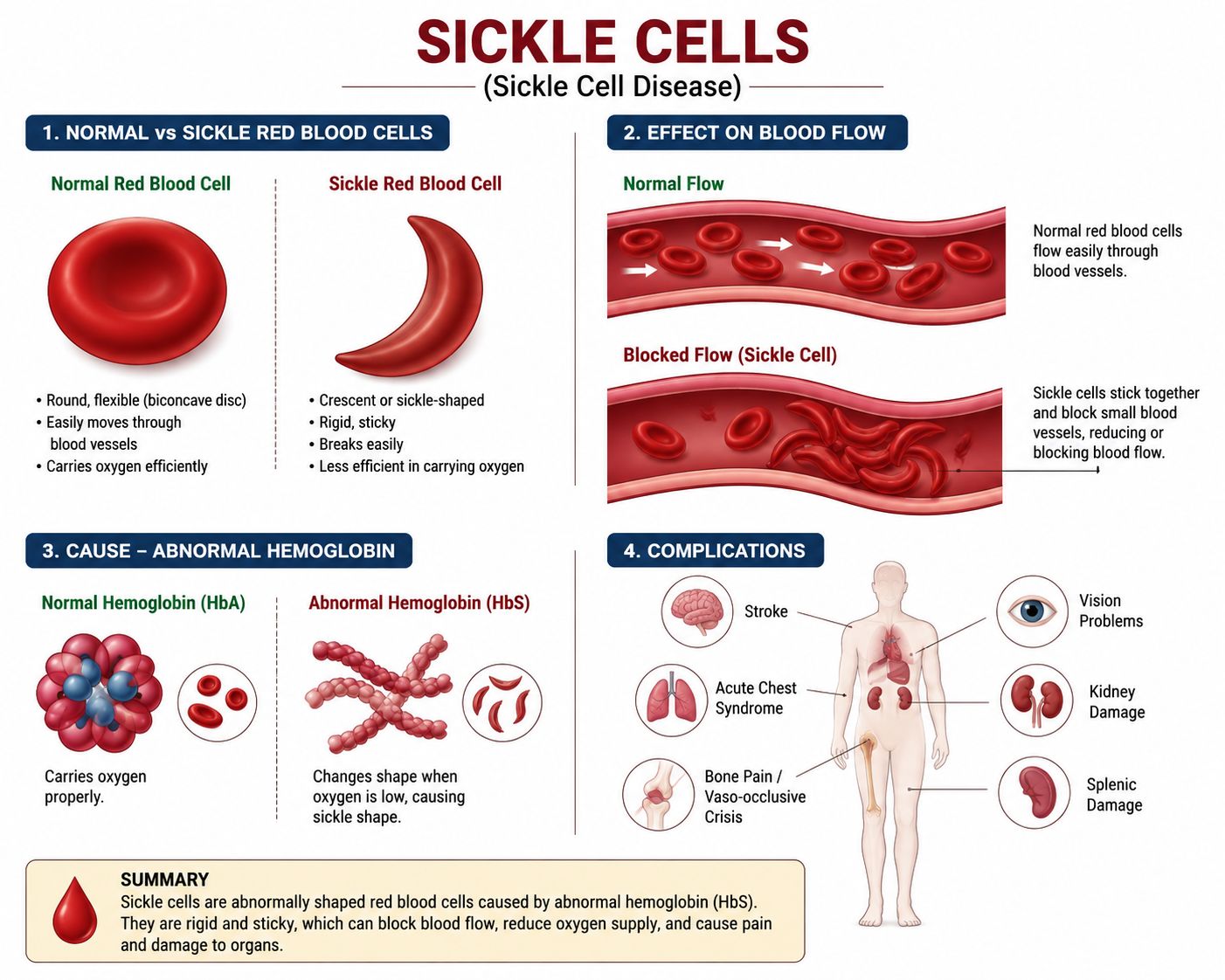
Sickle cell disease is the commonest inherited hemoglobinopathy worldwide. It is caused by a mutation in the beta globin gene, resulting in formation of defective hemoglobin. Sickle hemoglobin (HbS) readily polymerizes, rendering a sickle shape to the RBCs and giving rise to many complications. It is highly prevalent in certain parts of India, known as the sickle belt. A high prevalence is noted amongst the tribal population.
The Sickle Belt of Madhya Pradesh
Out of 45 districts of Madhya Pradesh, 27 fall under the sickle cell belt:
Pathophysiology
Sickle cell disease (SCD) encompasses a myriad of acute and chronic complications owing to the “sickling” of erythrocytes. The intravascular hemolysis of the sickled HbS polymers initiates a cascade of events by nitric oxide depletion, vasoconstriction, vaso-occlusion, tissue ischemia and in severe cases infarction. Repeated sickling and inflammation results in vascular remodelling, vasculopathy and chronic complications.
Complications of Sickle Cell Anemia
- Anemia
- Jaundice
- Pain crisis
- Acute chest syndrome
- Stroke
- Infections
- Sequestration crisis
- Avascular necrosis of femoral head
- Osteoporosis
- Psychosocial issues
- Gall stones
- Priapism
- Leg ulcers
- Cardiac dysfunction
- Short stature
- Delayed puberty
- Sickle retinopathy
- Pulmonary hypertension
- Pulmonary thromboembolism
- Sickle nephropathy
- Renal medullary cancer
Sickle cell awareness, screening and counselling in the community.
Treatment
Sickle cell anemia is treated with hydroxyurea, folic acid supplementation, penicillin prophylaxis, vaccinations for capsulated organisms, and regular checkups and tests. Painful crises are managed with hyperhydration, antibiotics and analgesics. Acute chest syndrome or sequestration crisis may require blood transfusion, while acute stroke necessitates urgent exchange transfusion. Long term cure is achieved by allogenic HSCT. Gene therapy has also been approved in the recent past for the treatment of sickle cell anemia.
A Multidisciplinary Disease
Sickle cell anemia is not only a hematological disorder. Owing to multiple sites of sickling, inflammation, vascular remodelling and multiple infarcts, this disease affects the body on a systemic, multiorgan level. Thus, treatment of sickle cell anemia also requires a multidisciplinary approach.
While the core is Hematology, patients require major inputs from pediatrics/medicine, orthopedics, endocrinology, pulmonary medicine, obstetrics and gynecology, ophthalmology, nephrology, cardiology, surgery, neurology, genetics, fetal medicine, clinical psychology, palliative care medicine, pathology, biochemistry, radiology and transfusion medicine. All the specialities work hand in hand to give the right care to these patients and provide a holistic support system.
The Social and Financial Impact
A typically ignored aspect of sickle cell anemia is the social and financial impact on patients and their families. Quite often there are multiple patients in the same family, or some may have lost family members to the same illness. Being a chronic disorder, financial issues arise in the continuous medicine supply, tests and hospitalizations. Treatment compliance is frequently altered because of these aspects.
Moreover, current prevention strategies primarily focus on antenatal detection of sickle cell trait mothers, whereas the focus should be on pre-marital counselling and screening and marriage counselling. Prenatal diagnostic facilities also need to be more robust in order to detect sickle cell homozygous fetuses. The social stigma of the disease also needs to be addressed in the community. Marriage alliances are often rejected on disclosure of this illness. Similarly, children are ostracized and discriminated against as a result of frequent hospital visits.
"If the entire community joins forces, we will not be far from the day we eradicate sickle cell anemia from our community and from our country."
Therefore, on one hand the need of the hour is multidisciplinary holistic care for sickle cell anemia patients; on the other hand, public health awareness campaigns and health education will strengthen detection of carriers, marriage counselling and prenatal diagnosis. Advancements in HSCT techniques, gene therapy and gene editing hold a promising future ahead for patients with sickle cell anemia.